Last updated:
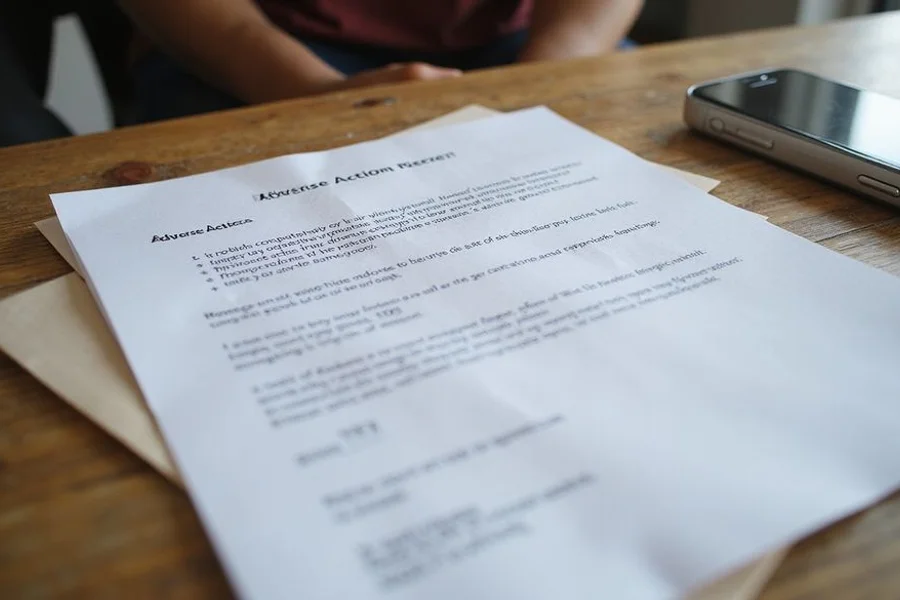
Read Your Adverse Action Notice First
Texas Eviction Friendly Apartments is a licensed apartment locating service (TREC #679806) that helps renters denied for evictions across Houston, Dallas, Austin, San Antonio, and Fort Worth find properties that will approve them. If you were just denied because of an eviction on your record, the single most important document right now is the adverse action notice. Under the Fair Credit Reporting Act (FCRA), the landlord is required to give you one within 30 days of the denial, either at the leasing office, by mail, or by email. Ask for it directly if you didn’t receive one.
The adverse action notice will tell you:
- Which screening company produced the report that led to the denial
- Your right to a free copy of that report (within 60 days)
- Your right to dispute any inaccurate information
Knowing which screening company screened you is roughly half the battle. Each platform pulls eviction filings from JP court records differently, and each is used by different Texas apartment communities - from Class-A luxury high-rises to garden-style complexes and Class-B mid-market properties. Below is how each one works.
How Texas Screening Platforms Flag Eviction Records
SafeRent (a RealPage product)
- Who uses it: dominates Class-A luxury; increasingly mid-market
- How it flags evictions: pulls JP court filings and LexisNexis rental history; automatically flags any eviction filing regardless of outcome
- Manual review: rare at Class-A; property-level at some mid-market
- What to do after SafeRent denial: apply at properties using CoreLogic (which has more configurable eviction rules) or independent-operator properties using in-house screening
CoreLogic
- Who uses it: common at MAA, Camden, mid-market operators
- How it flags evictions: pulls filings and provides scoring; property has some ability to configure rules (age cutoffs, balance status)
- Manual review: often available at property level
- What to do after CoreLogic denial: ask if the property’s decision was automatic or configured; try another CoreLogic property with different rules, or a full-record-reading independent
LexisNexis (rental history database)
- Who uses it: not a screening report itself, it’s the database most other screeners pull from
- How it flags evictions: comprehensive rental history including all JP court filings and landlord-reported balances
- What to do: if LexisNexis has an error (like an unpaid balance you’ve paid), dispute directly with LexisNexis, corrections flow to other screeners
TransUnion SmartMove
- Who uses it: independent landlords and smaller property portfolios
- How it flags evictions: pulls court records and scoring; provides recommendation to landlord
- What to do after denial: try properties using in-house screening or CoreLogic-configurable products
RentGrow (Yardi)
- Who uses it: Yardi-powered properties (common at Willow Bridge, some Greystar, mid-market operators)
- How it flags evictions: pulls court records; scoring integrates with Yardi property management
- What to do: property-level manual review often available; ask directly
Yardi ScreeningWorks
- Who uses it: newer Yardi properties, some mid-market
- How it flags evictions: similar to RentGrow but with more flexible property-level configuration
- What to do: property has more discretion than SafeRent-dominated properties
AppFolio Tenant Screening
- Who uses it: AppFolio-powered properties, common with smaller independent operators
- How it flags evictions: integrated with AppFolio property management
- What to do: many AppFolio-powered properties do property-level review, worth applying with documentation

5 Steps to Take Within 72 Hours of a Denied Application
- Get the adverse action notice, either you have it or ask for it in writing
- Note the screening company named on the notice
- Request a free copy of your report from that screening company (they must provide within 60 days)
- Review for inaccuracies, check balance status, dismissal notation, age of filing
- Dispute any inaccurate information in writing directly with the screening company
Our dispute guide walks through the FCRA dispute step-by-step.
Where to Apply After an Eviction Denial in Texas
The best next application is at a property using a different screening platform or one with property-level manual review authority. In Texas, this often means shifting from a SafeRent-screened Class-A community to a mid-market or independently managed apartment complex where the leasing office has discretion. Our approach:
- Note which screening platform denied you
- Cross-reference against your target Texas cities’ property inventory
- Prioritize properties using a different platform or in-house screening
- Consider whether guarantor products (OneApp, Liberty Rent, Rent With CoSign) would unlock properties that would otherwise deny
See our PMC eviction policy guide for how each major Texas PMC handles evictions across their portfolio.
How Our Post-Denial Routing Compares
| Feature | Typical Approach | Texas Eviction Friendly Apartments |
|---|---|---|
| Screening platform identified | Renter guesses or doesn’t check | Reviewed from adverse action notice |
| Next property selection | Random applications at $50-$100 each | Routed to properties on different screening platforms |
| FCRA dispute filing | Renter navigates alone | Guided dispute with screening company |
| Guarantor matching | Renter searches online | Matched to OneApp, Liberty Rent, or CoSign based on file |
| Cost to renter | Application fees add up | 100% free - property pays us |
| Timeline to reapplication | Weeks of trial and error | Callback within 2 hours with target list |
Timelines for Disputes, Reports, and Reapplication
- Adverse action notice: within 30 days of denial (usually much faster)
- Free screening report: request and receive within 5 to 14 days
- FCRA dispute investigation: 30 days by law (as of 2026, this has not changed)
- Next application submission: as soon as you have the adverse action notice and know the screening platform (do not just re-apply at random)
How We Route You After a Screening Denial
Texas Eviction Friendly Apartments follows this process after every denial:
- Review the adverse action notice with you
- Pull the screening report and identify any disputable errors
- Build a target list of properties using different screening platforms or with manual review
- Guide any FCRA dispute you need to file
- Route to guarantor products if the file supports it
Just denied? Fill out the form above. A licensed Texas real estate agent (TREC #679806) will call you within 2 hours to build a next-step plan - free, because the property pays us when you sign a lease.