Guide
If You Pay Off an Eviction, Does It Come Off Your Record?
Paying updates status to 'satisfied' but the filing stays. How a paid balance actually helps your approvals.

One of the most common questions we hear: “If I pay off my eviction balance, does the eviction come off my record?”
The short answer: no, but yes to something more useful. Paying doesn’t remove the filing itself — the JP court record is permanent under TRCP Rule 76a. But paying does update the balance status on your tenant screening report, which meaningfully improves your rental approval odds.
Here’s exactly what changes and what doesn’t when you pay.
What paying doesn’t do
- Doesn’t remove the JP court filing. The eviction case remains in the public court record forever.
- Doesn’t erase the eviction from your rental history. Screening reports will still show the eviction occurred.
- Doesn’t seal or expunge anything. Texas has no eviction expungement mechanism. See our expungement guide.
What paying does do
- Updates the balance status. From “unpaid” or “open” to “satisfied” or “paid in full” on your screening report. This is a big deal for future applications.
- Removes active collections tracking. If the balance was in collections, paying it stops the collections activity from continuing to affect your credit.
- Improves credit score. Paid balances stop hurting your credit; can improve your score 20 to 40 points over 3 to 6 months.
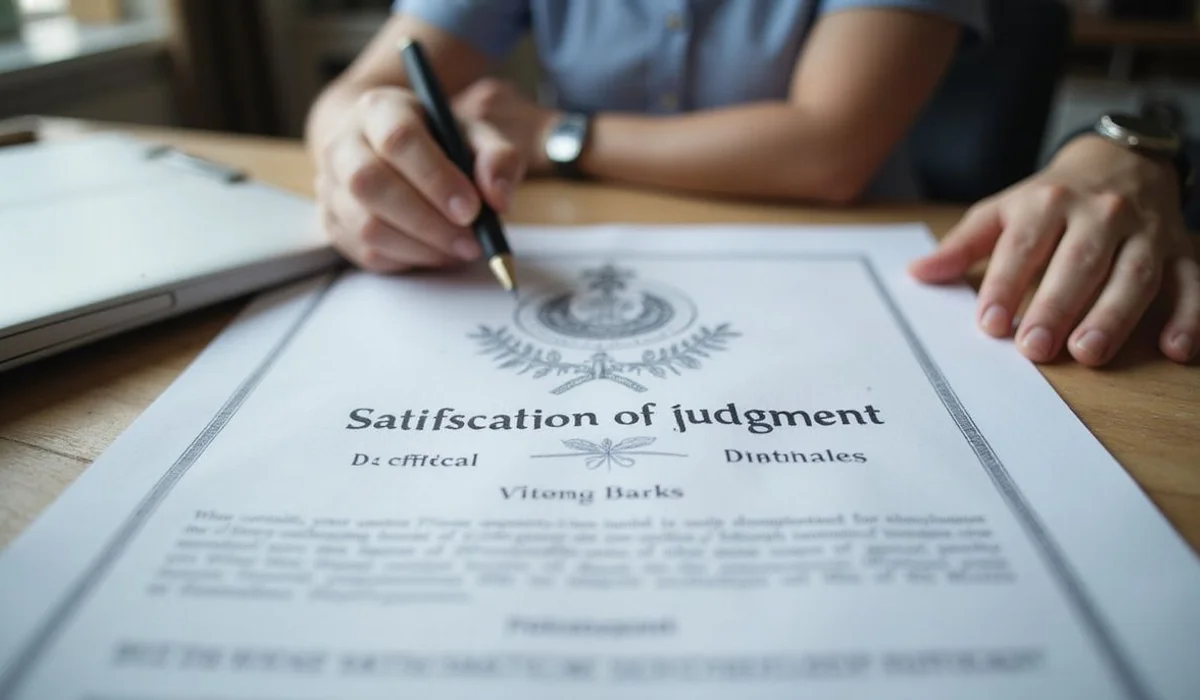
- Enables satisfaction of judgment filing. If your eviction ended in a court judgment, you can file a satisfaction of judgment with the JP court once you’ve paid — this creates a court record of payment.
The screening-report reality: paid vs unpaid
Two identical eviction filings — one paid, one unpaid — read very differently on a tenant screening report:
Unpaid balance shows up as:
- Active property debt owed to former landlord
- Often triggers automatic denial rules on Class-A properties
- Signals ongoing financial risk to leasing agents
- Frequently requires guarantor or double deposit to overcome
Satisfied / paid balance shows up as:
- Historical debt fully paid
- Passes many automatic denial rules that flag open balances specifically
- Signals resolution and financial responsibility
- Often approved with standard deposit and small or no risk fee
At many properties, paying the balance moves you from “auto-denied” to “case-by-case reviewed.” That’s the practical impact.
How to make sure the paid status shows correctly
Paying the landlord or collections agency doesn’t automatically update your screening report. You often have to push the update:
- Get written proof of payment. Zero-balance letter from the landlord or collections agency, on their letterhead, with your name and the balance amount clearly stated.
- Wait 30 to 60 days for the landlord or collections to report to the screening databases (mainly LexisNexis).
- Pull your own screening report to verify the update went through.
- If not updated, file an FCRA dispute with the screening company, attaching your proof of payment. Our dispute guide walks through the process.
- File satisfaction of judgment with the JP court that heard your case, if there was a judgment. This creates a permanent court record of payment.
Should you pay off the balance?
Depends on your financial situation. Paying a $2,000 to $5,000 balance is meaningful cash for most renters, but it’s often less than what a renter would spend on:
- Wasted application fees at auto-denying properties ($500 to $1,500)
- Higher deposits and risk fees for open-balance approvals ($1,000 to $3,000 more than paid-balance)
- Guarantor product fees to underwrite the open balance ($250 to $600)
For many renters, paying the balance actually saves total move-in cost in the medium term because it opens cheaper deposit and risk-fee terms.
If you can’t pay the full balance, some landlords will accept a settlement for less than the full amount. Get any settlement in writing before paying. Our settle old debt guide covers the negotiation approach.
When paying doesn’t help enough
If your eviction is very recent (under 6 months) or you have multiple evictions, paying alone may not unlock enough options. In those cases, combine paying with:
- A guarantor product (OneApp Guarantee, Liberty Rent)
- Application to private-owner-style properties rather than large PMCs
- Detailed documentation package (letter of explanation, income proof)
Our balance paid service walks through the properties that specifically favor paid-balance renters.
The takeaway
Paying doesn’t remove the eviction, but it changes the balance status — and the balance status is what triggers many automatic denials. For most renters with an open balance, paying is the single strongest lever available. Combined with the right property targeting, it often means the difference between placement in weeks versus months of denials.
Ready to see how a paid balance changes your options in your target city? Fill out the form on our home page or reach us at 808-213-6770.
Frequently Asked Questions
Will paying delete the eviction?
+
How long until the paid status shows on my report?
+
Does paying really improve approval odds?
+
Related Guides
10 Mistakes Renters With Evictions Make on Applications (And How to Avoid Them)
The 10 costly mistakes renters with evictions make when applying — and exactly how to avoid each and stop wasting fees.
Can You Be Denied Housing for a Dismissed Eviction in Texas?
Why dismissed filings still appear and get renters denied — and how to prove the dismissal to leasing offices.
Can You Get an Eviction Expunged in Texas? (2026 Update)
Texas has no way to seal or expunge an eviction. HB 2909 died in committee. Why it's permanent and what to do instead.
How Eviction Records Work in Texas: Court Records vs. Screening Reports vs. Credit Reports
The three record systems untangled: JP court records (permanent), screening reports (7-year FCRA), credit reports (debt only).