Guide
Risk Fees and Extra Deposits With an Eviction
What risk fees and double deposits really cost renters with an eviction in Texas, when charged, and how to reduce them.

Risk fees and double deposits are how Texas properties price the additional risk of renting to someone with an eviction. Understanding when they’re charged, how much they run, and how to reduce them saves real cash. Here’s the breakdown.
What each fee actually is
Risk fee: a non-refundable one-time fee charged to higher-risk applicants at move-in. Typically $150 to $500 for renters with evictions. Sometimes amortized as a rent uplift ($25-$50/month for 12 months). You never see this money back.
Double security deposit: a refundable deposit equal to 2x the standard deposit (which is usually 1x monthly rent). For a $1,500 unit with standard 1x deposit, that’s $3,000 instead of $1,500. Subject to lease terms — you get it back at move-out minus damages.
Both: some properties charge both — risk fee AND double deposit. Others charge one or the other. A few will substitute deposit for guarantor coverage.
When properties charge risk fees
Almost universally when:
- Eviction under 3 years old
- Any unpaid balance
- Credit under 600
- Prior denials in the property’s system
- New employment (under 6 months)
Sometimes when:
- Eviction 3-5 years old
- Dismissed eviction with balance
- Credit 600-650
Rarely when:
- Eviction 5+ years old with paid balance and clean history since
- Strong income (4x+ rent) offsetting other factors
- Guarantor-backed application
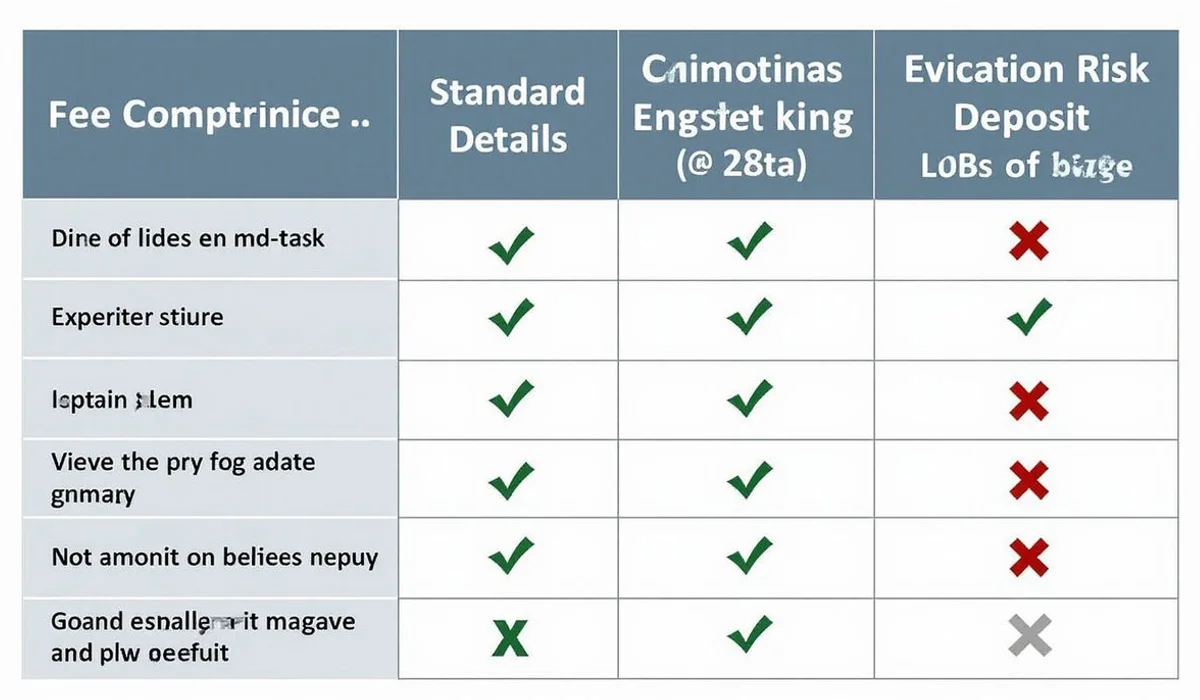
Risk fee amounts by property tier
Independent operators: $150-$300 typical, often negotiable
Class-B mid-market: $200-$400, sometimes reduced with guarantor
Class-A luxury (accepting eviction): $400-$600, rarely negotiated
Class-A with 5+ year old eviction: $0-$200, often waived
Double deposit thresholds
Similar tier-by-tier:
Independent operators: 1.5x-2x standard deposit typical
Class-B mid-market: 1.5x-2x with paid balance; 2x with unpaid
Class-A: 2x-3x standard when accepting
With guarantor: often reduced to standard 1x
When both are charged
Some properties stack risk fee AND double deposit. For a $1,500 unit:
- Standard deposit: $1,500
- Double deposit surcharge: +$1,500 (refundable)
- Risk fee: $400 (non-refundable)
- Extra vs standard renter: $1,900
That’s cash out the door before you consider first month, admin fee, and application fees.
How to reduce risk fees and double deposits
Pay the balance first. Biggest single lever. Many properties waive risk fee AND reduce deposit to 1x when balance is paid. Savings: $500-$2,000+ upfront.
Use a guarantor product. OneApp Guarantee or Liberty Rent often replaces the risk fee AND reduces deposit. Guarantor fee: $250-$700, but usually less than the deposit + risk fee it replaces.
Use a deposit alternative. Rhino ($15-$50/month) replaces the cash deposit — cuts upfront by $1,500-$3,000. Adds monthly cost but improves cash flow.
Show reserves. Bank statements with 6+ months of rent in savings sometimes soften the deposit requirement.
Ask directly. Some independent operators will waive or reduce fees for well-documented applicants. Costs nothing to ask.
Prepay rent. Some properties trade an extra month of prepaid rent for reduced deposit. Not always a good trade — evaluate case-by-case.
What’s actually negotiable
Highly negotiable: risk fee amount (often 20-40% flexibility), specific deposit multiple, deposit alternative acceptance
Sometimes negotiable: guarantor requirement, prepaid rent option
Rarely negotiable: whether ANY risk fee is charged (at properties that charge them), application fees, admin fees
Never negotiable: valid screening criteria, income requirements

Total-cost comparison example
For a $1,500/month unit, over the first year of tenancy:
Standard renter:
- Deposit: $1,500 (refundable)
- Rent × 12: $18,000
- Total year 1: $19,500 (with $1,500 refundable)
Eviction renter with cash deposit + risk fee:
- Deposit: $3,000 (refundable)
- Risk fee: $400 (non-refundable)
- Rent × 12: $18,000
- Total year 1: $21,400 (with $3,000 refundable)
Eviction renter with Rhino + no risk fee (guarantor-covered):
- Deposit: $0 cash (Rhino monthly $30)
- Rhino year 1: $360
- Guarantor fee: $400 (one-time)
- Rent × 12: $18,000
- Total year 1: $18,760 (no refundable)
The guarantor + Rhino path actually saves cash in year one compared to standard renter — but the standard renter recovers the deposit at move-out.
The bottom line
Risk fees and double deposits are the price of renting with an eviction. Expect to pay them at most properties. But smart use of guarantors and deposit alternatives can cut upfront cash 30-50%.
Our free service walks the deposit and risk fee expectations for each recommended property. Fill out the form on our home page.
Frequently Asked Questions
What is a risk fee at an apartment?
+
Can I negotiate the risk fee or double deposit?
+
What's the difference between a risk fee and a double deposit?
+
Related Guides
10 Mistakes Renters With Evictions Make on Applications (And How to Avoid Them)
The 10 costly mistakes renters with evictions make when applying — and exactly how to avoid each and stop wasting fees.
Can You Be Denied Housing for a Dismissed Eviction in Texas?
Why dismissed filings still appear and get renters denied — and how to prove the dismissal to leasing offices.
Can You Get an Eviction Expunged in Texas? (2026 Update)
Texas has no way to seal or expunge an eviction. HB 2909 died in committee. Why it's permanent and what to do instead.
How Eviction Records Work in Texas: Court Records vs. Screening Reports vs. Credit Reports
The three record systems untangled: JP court records (permanent), screening reports (7-year FCRA), credit reports (debt only).